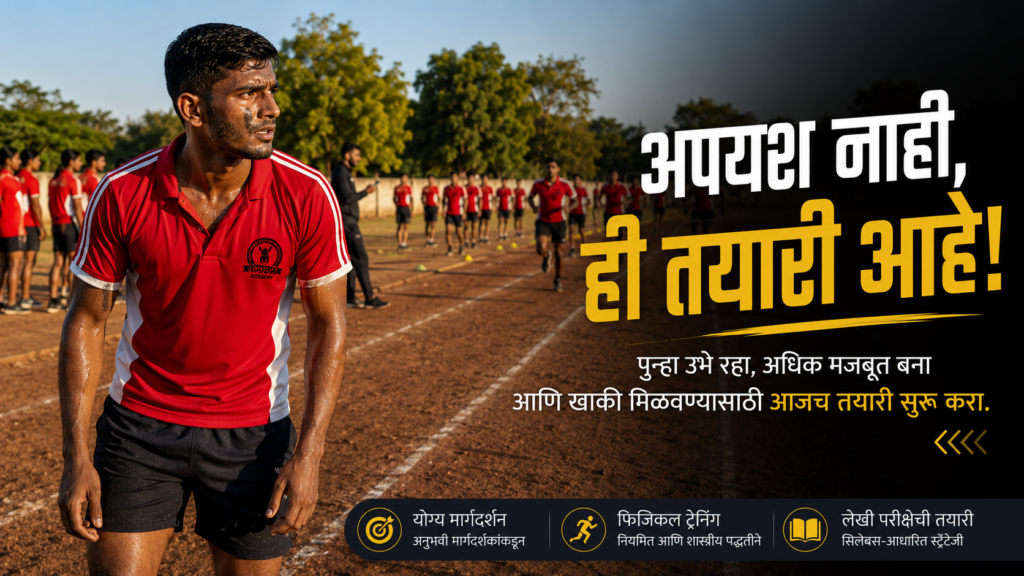
You failed the police bharti. Here’s What Every Serious Police Training Academy Will Tell You Next.
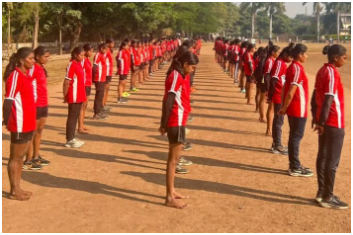
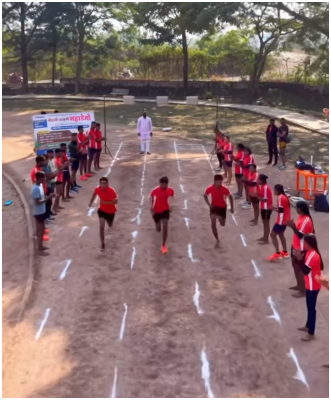
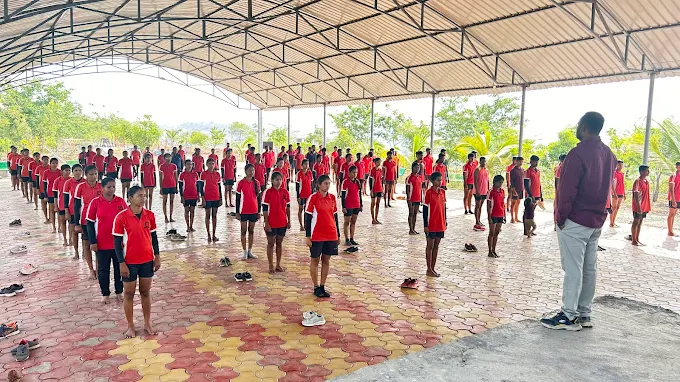
The results came out. Your name wasn’t on the list. Maybe you already knew before you saw it—a split second during the 1600m run where your legs gave out twenty seconds too early. Maybe you didn’t see it coming at all, and the notification hit like a wall. Either way, you’re sitting with it now. The silence at home that feels heavier than anything anyone actually says. The relatives who ask with that particular tone. The question underneath everything: is it even worth trying again? Before this article tells you anything practical, it needs to say this clearly—failing police bharti doesn’t mean you weren’t built for it. It means your preparation and your exam day didn’t align. That’s a solvable problem. What follows isn’t motivation for the sake of motivation. It’s a structured, honest breakdown of what went wrong and exactly what you need to do differently. What should I do after failing Police Bharti? After failing Police Bharti, first identify whether you failed the physical efficiency test, physical standard test, written exam, or a combination thereof. Then build a structured 90-day recovery plan targeting your specific gap—daily running drills, written syllabus mapping, or both. Enrolling in a dedicated police training academy with supervised coaching significantly improves your next attempt outcome. Why Most Candidates Fail Police Bharti (And It’s Not What You Think) Most people assume Police Bharti candidates fail because they simply aren’t fit enough. That explanation is too simple — and it keeps candidates from fixing the actual problem. Failure almost always falls into one of three specific categories. Knowing which one applies to you changes everything about how you prepare next. Physical Efficiency Test (PET) Timing Errors The 1600m run eliminates a significant number of candidates — but rarely because they lack physical ability. The breakdown usually happens in the first 400 meters. Candidates start too fast. Adrenaline takes over, the pace goes out immediately, and by the 800m mark the body is already fighting to recover instead of pushing forward. Without structured interval training that specifically mimics the demands of a timed PET run, this pattern repeats itself in training and on exam day. Pull-ups and long jump failures follow a similar pattern — technique errors that regular gym training doesn’t correct because gym training isn’t designed around PET sequencing. These are fixable problems. They just require the right drill environment and a coach who’s watched enough candidates fail to know exactly where the breakdown happens. Written Exam Preparation — The Overlooked Half Here’s the statistic that surprises most candidates when they finally sit down and calculate it: the written exam carries significant weightage in the final merit list. Candidates who score just below the written cutoff don’t make it through—even when their physical performance was strong. Most Police Bharti aspirants spend roughly 80–90% of their preparation time on physical training and treat the written exam as secondary. General knowledge, Marathi language, and reasoning sections then become the quiet reason their overall merit falls short. A structured police bharti academy that runs both tracks simultaneously—physical drill sessions in the morning and written exam coaching in the afternoon—closes this gap methodically rather than leaving it to chance. PST vs. PET—Why the Confusion Costs Candidates Preparation Time These two stages are evaluated separately, and confusing them is more common than most candidates admit. The Physical Standard Test measures height, weight, and chest; these are assessed before the PET even begins. If you were eliminated at the PST stage, no amount of running drill improvement addresses the actual reason you didn’t proceed. Understanding exactly which stage ended your attempt tells you precisely what your next preparation cycle needs to prioritize. If you’re genuinely unsure which stage you were eliminated at, check your official result documentation or contact the recruitment board directly. How Long Does It Actually Take to Prepare After Failing Once? The honest answer: 90 days of structured, consistent preparation is enough to produce a measurable difference for most candidates — provided those 90 days are built around a clear phase structure, not random training. Phase Timeline Primary Focus Foundation Days 1–30 Baseline 1600m timing, PET drill sequence introduction, full written syllabus mapping Build Days 31–60 Interval running progression, timed PET mock sessions, subject-wise written exam rotation Peak Days 61–90 Full PET simulation under exam conditions, complete written mock papers, physical and mental readiness consolidation The reason candidates at a residential police training academy consistently compress this timeline is straightforward—every session is supervised, timed against actual PET standards, and adjusted based on individual performance data. There’s no guesswork about whether your pace is improving because the numbers are tracked daily. Self-preparation can work. But without an external structure that holds you to the standard rather than the standard you’re comfortable with, most candidates plateau around Day 45 without realizing it. 👉 Want a detailed breakdown of this schedule? Get in touch with our team directly to receive your structured 90-Day Police Bharti training timeline. What Separates Candidates Who Clear It the Second Time The physical difference between candidates who fail once and clear it the second time is rarely dramatic. The preparation environment is almost always what changes. Structured Daily Drills vs. Self-Preparation When you train alone, you set your own pace. And when you’re tired — which happens consistently around Week 3 — your pace quietly drops to something manageable rather than something challenging. No one is there to call it. At a residential Maharashtra Police Academy in Pune, daily physical drills are timed from the first session. Your 1600m time on Day 1 is recorded. So are Day 7, Day 30, and Day 60. The progression is visible, the gaps are obvious, and the coaching corrections happen in real time rather than weeks later when a bad habit is already embedded. The 14-acre dedicated training ground at Gavhane Career Academy near Rajgurunagar runs exactly on this model—supervised morning drills on a measured 400-meter track, with individual performance feedback built into every session, not just given